
Prep bays and mixing rooms
Moves are not always limited to the main booth. Related paint shop equipment often needs planning and coordination as part of the same job.
A proper relocation has to think about dismantling, transport planning, reinstall, electrical and control reconnection, and whether the booth is actually ready to be recommissioned once it arrives. That is where experience matters, because moves tend to expose the real condition of a booth.
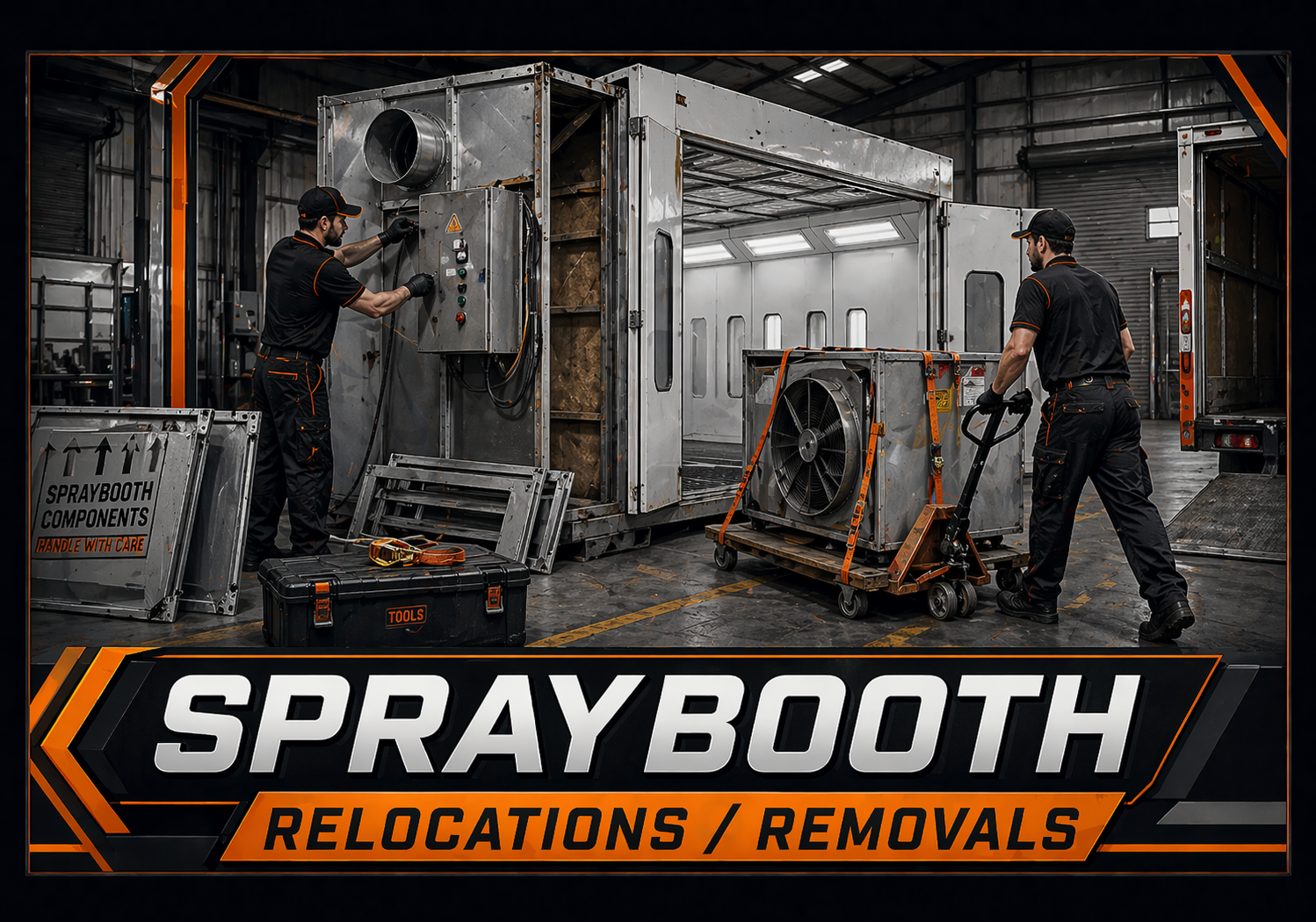
Relocation work tends to reveal what a booth is really like. Once the equipment starts coming apart, missing parts, old damage, glass issues, worn seals, poor previous repairs, and control problems have a habit of showing themselves.
That changes the job. A relocation is not only about getting the booth from one site to another. It is also about dismantling in a way that makes reassembly easier, keeping track of components, planning transport properly, and understanding what should be repaired, upgraded, or checked before the booth goes back into operation.
The support can apply to spray booths, prep bays, paint mixing rooms, and related paint shop equipment where the move needs to be planned and recommissioned in a way that still makes sense later.
Site access, layout, dimensions, timing, and existing booth condition all affect how the job should be approached.
Components need to be labelled, handled, and documented in a way that saves time and confusion later when the booth is being rebuilt at the new site.
Once the booth is at the new site, the work usually includes reassembly, reconnecting systems, and dealing with issues revealed during the move.
The final question is whether the booth is ready to return to service, or whether more repairs, parts, or reporting are needed first.
Moves are not always limited to the main booth. Related paint shop equipment often needs planning and coordination as part of the same job.
Electrical items and controls need to be understood as part of the relocation path, especially when the booth is being brought back into service.
Seal damage, broken glass, missing hardware, and old condition issues often become easier to deal with while the booth is apart, and relocation is often the right time to sort overdue repairs or sensible upgrades.
Sometimes the move is also the right moment to document what was found, what is serviceable, and what should be budgeted or dealt with next.
Yes. Relocation work often involves existing equipment, older setups, and mixed parts history rather than a clean new install.
It should be. A booth move is not really finished until the booth is back together, reconnected properly, and ready for the next stage.
That is common. Relocations often reveal missing components, damaged wear items, and older faults that were hidden until the booth came apart.
Use the links below to move into the next relevant page.