
Filters, airflow, fans, and dampers
Inlet and exhaust filters, pressure readings, airflow balance, fan condition, dampers, and the signs that overspray handling or booth performance is drifting away from where it should be.
Good servicing is not just a stamp in a book. It should show how the booth is actually tracking, what wear is building, and what needs sorting before it turns into downtime, finish issues, or an avoidable callout. If needed, a service visit can also include a spraybooth inspection report so the condition and next steps are documented properly.
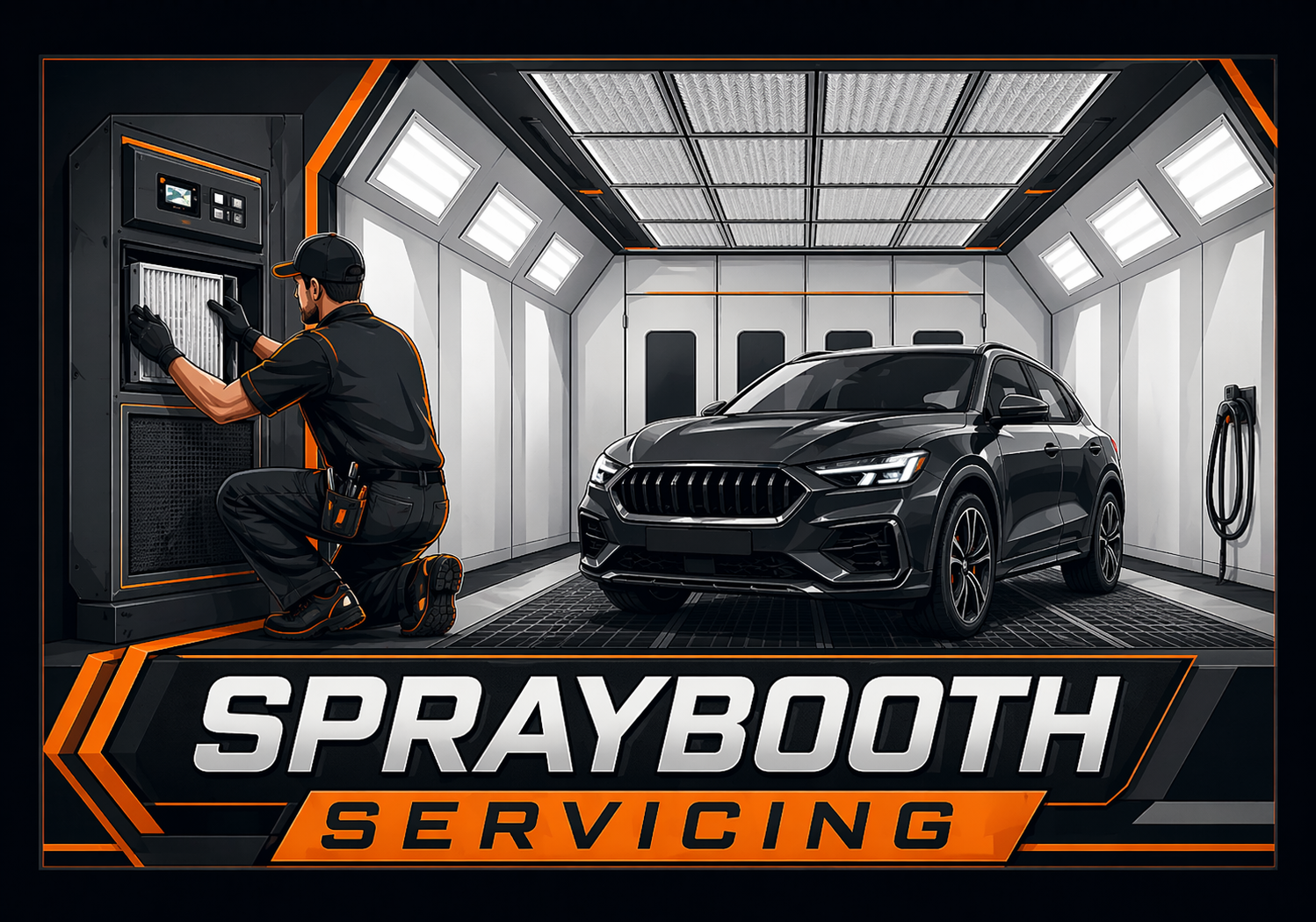
A spraybooth usually gives warnings before it properly falls over. Filters load up, airflow drifts, burners start playing up, terminals loosen off, dampers stop tracking properly, lights go bad, or door hardware slowly gets worse until the whole booth becomes a daily nuisance.
That is why a proper service visit matters. The point is not to tick a few boxes and leave. The point is to work through the equipment properly and give the customer a clearer picture of what is wearing, what is out of line, and what is likely to need attention next.
Nebular services spray booths, prep bays, paint mixing rooms, open-face spraybooths, and related paint shop equipment across mixed-brand sites, not just one booth family.
Exact check points depend on the booth and site, but these are the kinds of service items customers are actually paying for.
Inlet and exhaust filters, pressure readings, airflow balance, fan condition, dampers, and the signs that overspray handling or booth performance is drifting away from where it should be.
Burner components, heating operation, ignition-related items, and the controls that affect how reliably the booth is running through its normal cycle.
Control gear, interlocks, switching, terminals, sensors, electrical wear, and safety-related items that can quietly turn into nuisance faults or unsafe operation later.
Door seals, handles, hinges, window glass, latches, lights, labels, and the everyday booth hardware that customers usually notice only once it has got bad enough to be annoying.
Enclosed booths across different brands and ages, including the wear, control, airflow, and heating issues that show up on real workshop equipment.
Support for the equipment around the main booth where airflow, lighting, electrical condition, and general operation still matter to the paint shop as a whole.
Existing workshop gear still needs sensible servicing even where the setup is older, more basic, or not built around one current product range.
Smaller support gear can still affect daily workflow and colour testing, so it makes sense to keep that within the servicing conversation where relevant.
The real value is not only the checks themselves. It is the practical outcome: knowing what is serviceable, what is wearing out, what should be repaired, and whether parts, further fault finding, or a more formal report should be lined up next. If the customer wants that condition documented properly, every service visit can also include a spraybooth inspection report with photos, observations, and clear next-step notes.
Before jumping to assumptions, the useful starting point is what the booth is doing on site today and what the customer has already noticed.
Filters, airflow, burners, fans, controls, doors, and safety items all help tell the real condition story when checked in a sensible order.
The visit is more useful when the customer understands what was found now and what is likely to matter before the next service or next failure.
Servicing often becomes the entry point into replacement hardware, repair work, parts supply, or a spraybooth inspection report that records the booth condition properly after the visit.
No. Nebular services existing workshop equipment across all makes and models, including mixed-brand sites and older setups that still need practical support.
Yes. If you want the booth condition documented properly, the service visit can also include a spraybooth inspection report with photos, observations, and practical notes on what should happen next.
Yes. That is common. Servicing often uncovers worn filters, burner issues, damaged hardware, airflow problems, or control faults that need the next stage lined up properly.
Yes. The scope can extend to prep bays, mixing rooms, open-face spraybooths, sprayout boxes, and related paint shop equipment where the servicing overlaps.
Use the links below to move into the next relevant page.